The best treatment for hyperpigmentation depends on the type of pigmentation you have and what’s causing it.
Different forms of pigmentation, including sunspots, freckles, melasma and post-inflammatory pigmentation, develop for different reasons and often require different treatment approaches. Professional treatments such as Laser Pigment Reduction, RF Needling (for melasma) and chemical peels may all help improve pigmentation, but the most effective treatment is one that’s personalised to your skin after a professional assessment.
Key Takeaways
- The best treatment for hyperpigmentation depends on the type and cause of your pigmentation.
- Sunspots, freckles, melasma and post-inflammatory pigmentation each respond differently to treatment.
- Professional treatments such as Laser Pigment Reduction, RF Needling and chemical peels can help improve pigmentation.
- Daily sun protection and personalised skincare are essential for maintaining long-term results.
- A professional consultation and complimentary skin scan can help determine the most suitable treatment plan for your skin.
Why Your Pigmentation Keeps Coming Back
You’ve finally faded that stubborn dark spot… only for it to return a few months later.
If that sounds familiar, you’re not alone.
Pigmentation is one of the most common skin concerns we see at Evolution Laser Clinic. Many clients invest in skincare or treatments expecting a permanent solution, only to find that their pigmentation returns over time.
The truth is, pigmentation isn’t one single condition. Different types of pigmentation have different causes, which means there isn’t one treatment that’s right for everyone.
Understanding why your pigmentation developed in the first place is the first step towards finding the treatment that will deliver the best results for your skin.

What Is Hyperpigmentation?
When people talk about “pigmentation”, they’re usually referring to hyperpigmentation, the medical term for areas of skin that become darker than the surrounding skin due to excess melanin production.
It can appear as:
- freckles
- sunspots
- melasma
- post-acne marks
- uneven patches of pigmentation
While pigmentation is harmless, it can be frustrating because different types of pigmentation behave differently and that’s why treating it isn’t always straightforward.
Why Does Pigmentation Keep Coming Back?
One of the biggest misconceptions is that once pigmentation fades, it’s gone forever.
Unfortunately, that’s not always the case.
Several factors can continue to trigger pigment production, including:
Sun Exposure
UV exposure is one of the biggest causes of pigmentation and one of the main reasons it returns after treatment.
Even a small amount of unprotected sun exposure can stimulate melanin production again, making sunscreen one of the most important parts of any pigmentation treatment plan.
Hormonal Changes
Melasma is often influenced by hormones and may be triggered by pregnancy, oral contraceptives or other hormonal changes. Because of this, it often requires ongoing management rather than a once-off treatment.
Inflammation
Pigmentation can also develop after acne, skin injuries or irritation. This is known as post-inflammatory hyperpigmentation (PIH).
Years of Sun Damage
Sometimes pigmentation has been developing beneath the surface for years before it becomes visible. As we age, accumulated sun damage can gradually appear on the skin.
Not All Pigmentation Is the Same
This is one of the biggest reasons pigmentation treatments don’t always deliver the same results.
Two people may both have dark spots, but one may have freckles while another has melasma. Although they can look similar, they often require completely different treatment approaches.
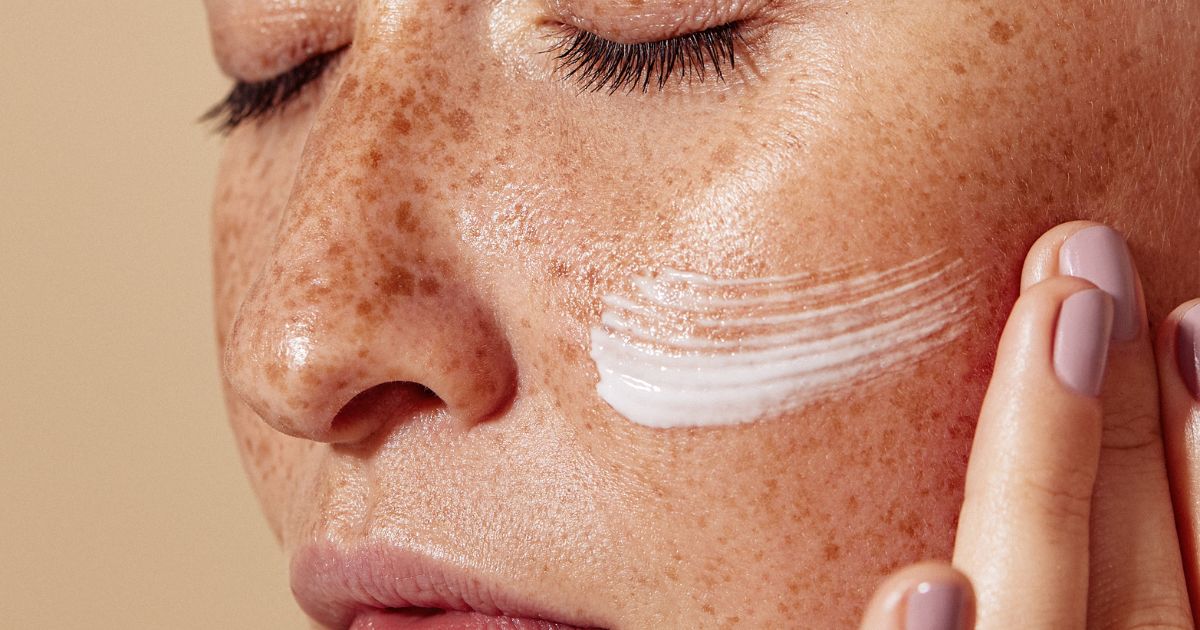
Common types of pigmentation include:
Sunspots
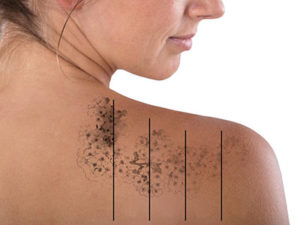
Also known as age spots or solar lentigines, these develop after years of UV exposure and commonly appear on the face, chest and hands.
Freckles
Freckles are largely genetic but become darker with sun exposure.
Melasma
Melasma usually appears as larger patches of pigmentation and is often influenced by hormonal changes and heat exposure.
Post-Inflammatory Hyperpigmentation
These darker marks develop after inflammation, such as acne breakouts or skin injuries.
Understanding the type of pigmentation you’re treating is the first step towards choosing the most effective treatment.
What Is the Best Treatment for Hyperpigmentation?
There isn’t one universal answer.
The best treatment for pigmentation depends on:
- the type of pigmentation
- how deep the pigment sits within the skin
- your skin type
- your lifestyle
- your treatment goals
That’s why we always begin with a professional consultation and skin assessment. Rather than treating every dark spot the same way, we create a personalised treatment plan based on your skin and the way your pigmentation behaves.
Professional Treatments That May Help
Laser Pigment Reduction
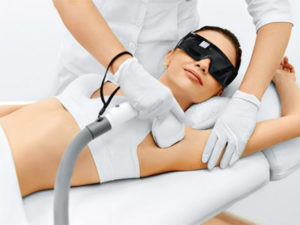
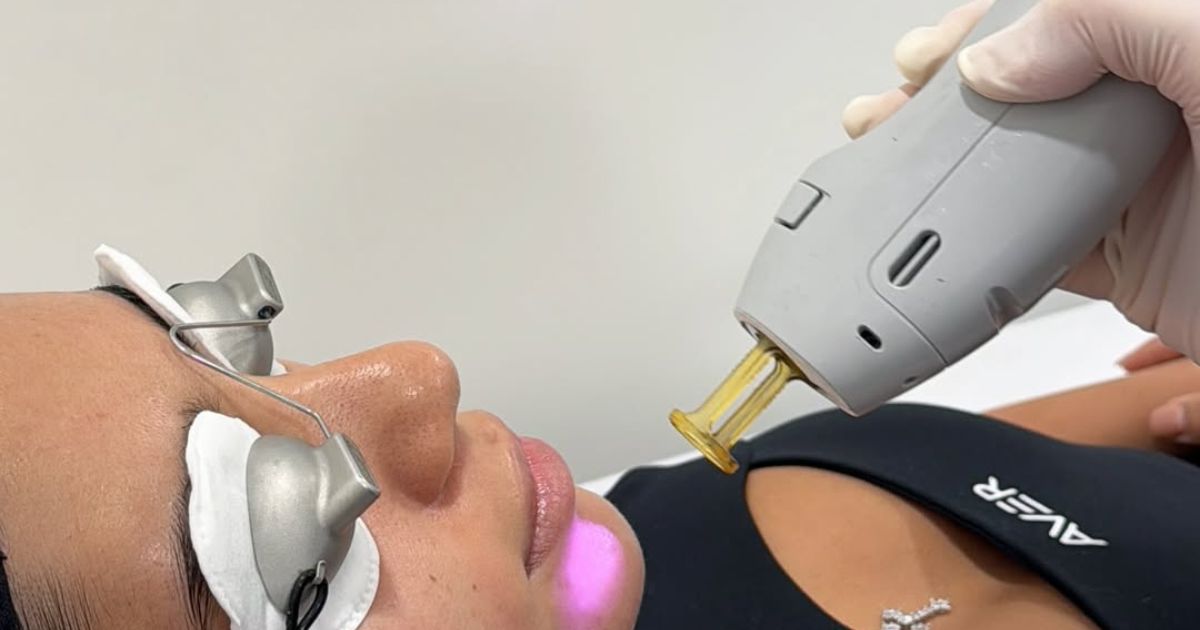
For superficial pigmentation such as freckles and sunspots, Laser Pigment Reduction is one of our most popular treatment options.
Our medical-grade laser delivers targeted energy that is absorbed by excess pigment without damaging the surrounding skin. The pigment gradually breaks down, rises to the surface over the following two to three days and naturally flakes away, revealing a brighter and more even-looking complexion.
Professional Chemical Peels
Not all pigmentation requires laser treatment. Depending on your skin type and pigmentation concerns, a professional peel may be recommended.
Pigment Peel
Our Pigment Peel is specifically designed for uneven skin tone and superficial pigmentation.
Using a combination of lactic acid and peptides, it gently encourages skin renewal while progressively improving the appearance of excess pigment with minimal downtime.
Probiotic Green Peel
For clients with mild pigmentation or more sensitive skin, the Probiotic Green Peel provides a gentler approach.
Combining fruit enzymes, lactic acid, Australian botanicals and probiotic ferment, it helps brighten the complexion while supporting the skin barrier.
Instant Glow Peel
If you’re noticing early pigmentation or dullness, the Instant Glow Peel gently exfoliates the skin to improve surface clarity and brightness.
It’s an excellent option for maintaining healthy-looking skin or introducing professional skin treatments into your routine.
Ultimate Peel
For more established pigmentation, sun damage and uneven skin texture, the Ultimate Peel provides a deeper level of resurfacing.
Because it penetrates further into the skin, careful preparation and aftercare are essential, making it a treatment that’s recommended following a professional consultation.
Acne Peel
Pigmentation caused by acne often requires a different approach.
Our Acne Peel targets active congestion while helping improve the appearance of post-acne pigmentation, making it ideal for clients dealing with ongoing breakouts and lingering acne marks.
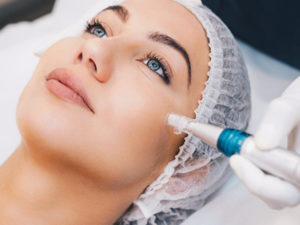
Skin Needling
If pigmentation is accompanied by acne scarring or uneven skin texture, Skin Needling may also be recommended as part of your treatment plan.
By stimulating collagen production and encouraging skin renewal, it helps improve overall skin quality while complementing other pigmentation-focused treatments.
RF Needling (Sylfirm X)
While laser treatments are highly effective for many forms of pigmentation, melasma often requires a different approach.
Melasma is a complex pigmentation condition that can be influenced by hormones, sun exposure and changes within the skin’s blood vessels. Because of this, it can be more challenging to treat and has a higher chance of recurring.
Sylfirm X RF Needling combines radiofrequency energy with advanced microneedling technology to target both pigment and the abnormal blood vessels associated with melasma, while stimulating collagen production and supporting overall skin renewal.
It may be recommended for clients with:
- Melasma
- Stubborn or recurring pigmentation
- Uneven skin tone
- Skin that would benefit from collagen stimulation and rejuvenation
As with all pigmentation concerns, a professional consultation is essential to determine whether laser, RF Needling or a combination of treatments is the most suitable approach for your skin.
Why a Skin Scan Matters
Pigmentation isn’t always visible on the surface.
Some pigment sits deeper within the skin, while other types may look similar but require completely different treatments.
That’s why we recommend a professional consultation with a complimentary skin scan.
By understanding the type and depth of your pigmentation, we can recommend the most suitable treatment plan instead of relying on guesswork.
Don’t Forget Your Home Care
Professional treatments are only part of the journey.
Maintaining your results at home is just as important.
We recommend:
- wearing broad-spectrum SPF every day
- avoiding unnecessary sun exposure
- following a personalised skincare routine
To help support brighter, more even-looking skin, we often recommend evolveMD Ultimate Brightening Serum+.
Formulated as a powerful pigment inhibitor, it helps improve the appearance of uneven skin tone while supporting overall skin clarity and luminosity. Used consistently alongside professional treatments, it can help maintain your results and reduce the appearance of future pigmentation.
Common Mistakes That Can Make Pigmentation Worse
Sometimes it’s everyday habits that stop pigmentation from improving.
Some of the most common mistakes include:
- skipping sunscreen
- expecting one treatment to solve everything
- picking at acne or irritated skin
- using harsh skincare without professional advice
- stopping treatment or home care too early
Treating pigmentation is often a journey rather than a quick fix, and consistency is key.
Final Thoughts
Pigmentation is incredibly common, but it’s also highly individual.
The best treatment for hyperpigmentation isn’t the same for everyone because every type of pigmentation behaves differently.
Rather than searching for one “magic” treatment, the best place to start is understanding your skin.
Book a free consultation and complimentary skin scan at Evolution Laser Clinic, and our experienced skin therapists will assess your pigmentation, explain what’s causing it and create a personalised treatment plan using professional treatments and medical-grade evolveMD skincare to help you achieve a clearer, brighter and more even-looking complexion.